
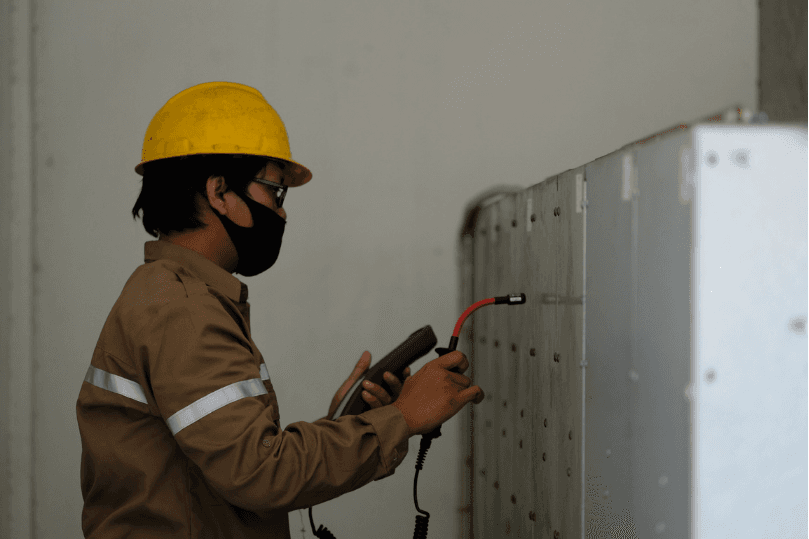
Building Reliable Substation & MV Switchgear Installation up to 36 kV
Reliable power distribution is essential for industrial facilities and infrastructure that depend on a stable and continuous electrical supply. Substations and Medium Voltage (MV) switchgear play a key role in managing, protecting, transforming, and distributing electrical power safely.
A well-designed system ensures that electrical power can be delivered efficiently while minimizing the risk of equipment failure, electrical faults, and unplanned downtime.
The Role of Substation & MV Switchgear
A substation serves as a critical point for transforming and distributing electrical energy according to the requirements of a facility. It integrates key equipment such as power transformers, switchgear, protection systems, and grounding systems.
Meanwhile, MV switchgear provides switching, isolation, and protection for medium voltage networks. Metal-clad switchgear is commonly applied where reliable protection and controlled operation are required.
For specific applications, these systems can be engineered for medium voltage levels up to 36 kV, depending on project requirements and system configuration.
Key Components
A typical substation and MV system may include:
MV Metal-Clad Switchgear – for switching, isolation, and protection.
Power Transformer – for voltage transformation and power distribution.
Protection & Control System – for monitoring and fault protection.
Grounding System – supporting electrical safety and fault-current management.
Oil Containment – helping control potential oil spills from oil-filled transformers.
Installation & Integration
Successful installation requires coordination between engineering, civil, and electrical works. Equipment foundations, cable trenches, grounding infrastructure, cable routing, and equipment positioning must be properly coordinated with the electrical installation.
The typical process includes engineering and planning, site preparation, equipment installation, electrical connection, inspection, testing, and commissioning.
This integrated approach helps ensure that each component performs according to its intended design and supports long-term system reliability.
Safety, Quality & Reliability
Medium voltage installations require strict attention to safety, quality, and technical compliance. Proper equipment installation, cable termination, grounding, protection testing, and pre-energization inspection are essential before the system is placed into operation.
A professionally planned and executed system can support reliable power distribution, operational safety, and reduced downtime risk.